
Should You Pay for an Outdoor Living Design?
Updated: Dec 22, 2025
Why Professional Designs Protect Your Budget, Timeline, and Experience
You’ve Met the Contractors, Now What?
You have done the hard part. You researched contractors, scheduled consultations, and welcomed multiple professionals into your home. Now you are facing the next big decision: should you pay for an outdoor living design, and if so, why?
In this edition of Beyond the Build, Darby and Nick Liput of Rocky Mountain Outdoor Living unpack one of the most misunderstood parts of the outdoor construction process: designs. From pricing and change orders to project experience and contractor accountability, design work plays a far larger role than most homeowners realize.
This guide explains when designs are necessary, what different design levels mean, how much they cost, and how they protect you from costly surprises.
Why Outdoor Living Designs Matter More Than You Think
Many homeowners believe designs are primarily for visualization, helping them “see” the finished space. While that is helpful, visualization is not the primary value.
The true purpose of a professional design is clarity.
A design allows a contractor to:
Price accurately
Identify site challenges early
Reduce change orders
Build exactly what was agreed upon
Without a design, contractors are forced to make assumptions. Those assumptions often lead to revisions, delays, and unexpected costs once construction begins.
The Hidden Cost of Skipping Design Work
Change Orders Add Up Quickly
Change orders are not always the result of bad contractors. Many are caused by incomplete or missing design documentation.
For example:
A patio bid that is flat may require a retaining wall once excavation reveals a slope
Elevation changes may require additional structural support
Materials assumed by the contractor may differ from what the homeowner envisioned
These issues are not visible from simply standing in a backyard. A design calls out:
Elevations
Dimensions
Material types
Quantities
Structural requirements
When projects are bid from professional designs, change orders are significantly reduced.
Real-World Example: Why Designs Prevent Jobsite Delays
As a hypothetical scenario of what could transpire without a design, we will use this example: during a swimming pool project, excavation began only to reveal that the pool would sit more than four feet above the ground, something not identified in the original drawings.
The result?
Crews and equipment were mobilized
Construction stopped on day one
Engineers had to redesign structural elements
Costs increased dramatically
This type of delay impacts both the homeowner and the contractor. Proper design work would have identified the elevation issue before construction ever started.
How Designs Improve the Overall Construction Experience
A well-designed project:
Starts smoothly
Moves efficiently
Minimizes surprises
Aligns expectations between homeowner and contractor
Even with designs, construction can present challenges. However, designs dramatically reduce risk and improve communication throughout the process.
Most importantly, they give homeowners confidence. You know exactly what you are paying for, how it will look, and how it will function within your space.
Understanding Different Levels of Outdoor Living Designs
Not all designs are created equal. Pricing and complexity vary based on scope and detail.
Common Design Types and Price Ranges
Basic 2D Designs ($500–$1,500):
Black-and-white layouts
Basic dimensions
Limited material detail
Color 2D Designs ($1,000–$2,500):
Enhanced visual clarity
Preliminary material selections
Better homeowner understanding
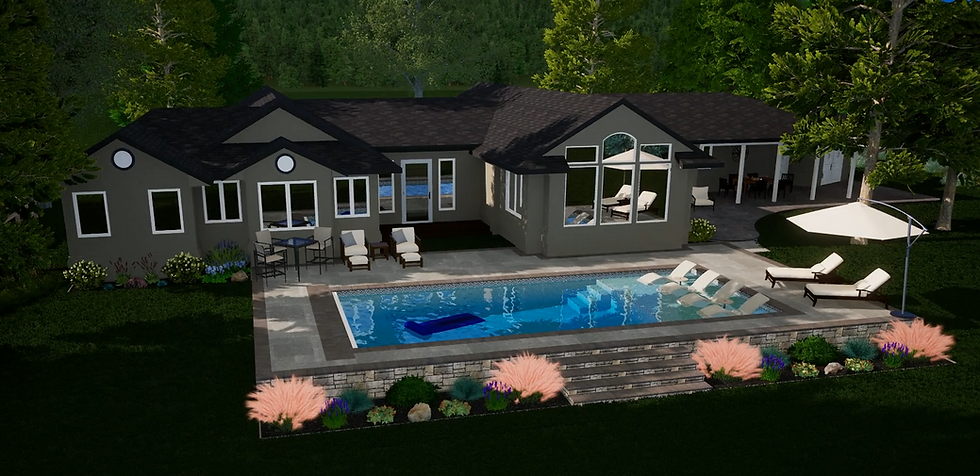
3D Designs ($2,000+):
Realistic renderings
Improved visualization
Strong alignment between vision and final product
High-End, Multi-Layer Designs ($10,000–$40,000+):
Hardscape, plant, irrigation, lighting layers
Architectural integration
Precise specifications for bidding and construction
The more layers included, the more protection you have as a homeowner.
Do You Always Need a Design?
When Designs Are Less Critical Initially
For very simple projects, such as basic sod, irrigation, or rock installation under $20,000, initial design work may not be necessary. A marked-up plot plan can be sufficient.
However, a signed design should always exist before construction begins, regardless of project size.
Why Designs Create Apples-to-Apples Bids
One of the biggest frustrations homeowners face is wildly different contractor pricing.
Without a design:
Contractors choose different materials
Scope varies from bid to bid
Comparisons become nearly impossible
With a design:
Materials are specified
Quantities are defined
Scope is consistent
This allows you to compare bids accurately and confidently.
Who Should Create the Design?
Ideally, your design should be created by:
The contractor you trust most, or
A qualified independent designer whose plans you own
When you pay for a design, you own it. That means you can take it to multiple contractors for bidding.
If a contractor cannot offer design services or lacks a relationship with a professional designer, it may be a red flag regarding their planning process.
Design Revisions: Why They Matter
Designs are not one-and-done.
A professional design process allows for:
Revisions
Refinement
Alignment with your long-term vision
Making changes on paper or on a screen is far less expensive and far less stressful than making changes during construction.
Design Timelines and Payment Expectations
How Long Designs Take
Quality designs take time. Expect:
Several weeks for completion
Longer timelines for complex or multi-layer designs
How Designs Are Paid For
Designs under $3,500 are typically paid in full up front
Designs between $5,000–$10,000 may be split into milestones
Large-scale designs often follow structured payment schedules
Payment structures should always be clearly defined and documented.
Final Thoughts: Designs Are Your Blueprint
Trying to build an outdoor living project without a design is like asking a contractor to bake a cake from a picture with no recipe.
Designs provide:
Direction
Accountability
Protection
Confidence
They elevate the entire experience for homeowners and contractors alike.
At Beyond the Build, our goal is to educate homeowners so they can make informed decisions, avoid costly mistakes, and enjoy a smoother, more rewarding outdoor living journey.


Comments